What goes in a dumpster — the complete Canadian disposal guide.
Most household and renovation waste is allowed. A handful of items have to go elsewhere because of provincial environmental rules. Here's the full list, with where to take the prohibited stuff.
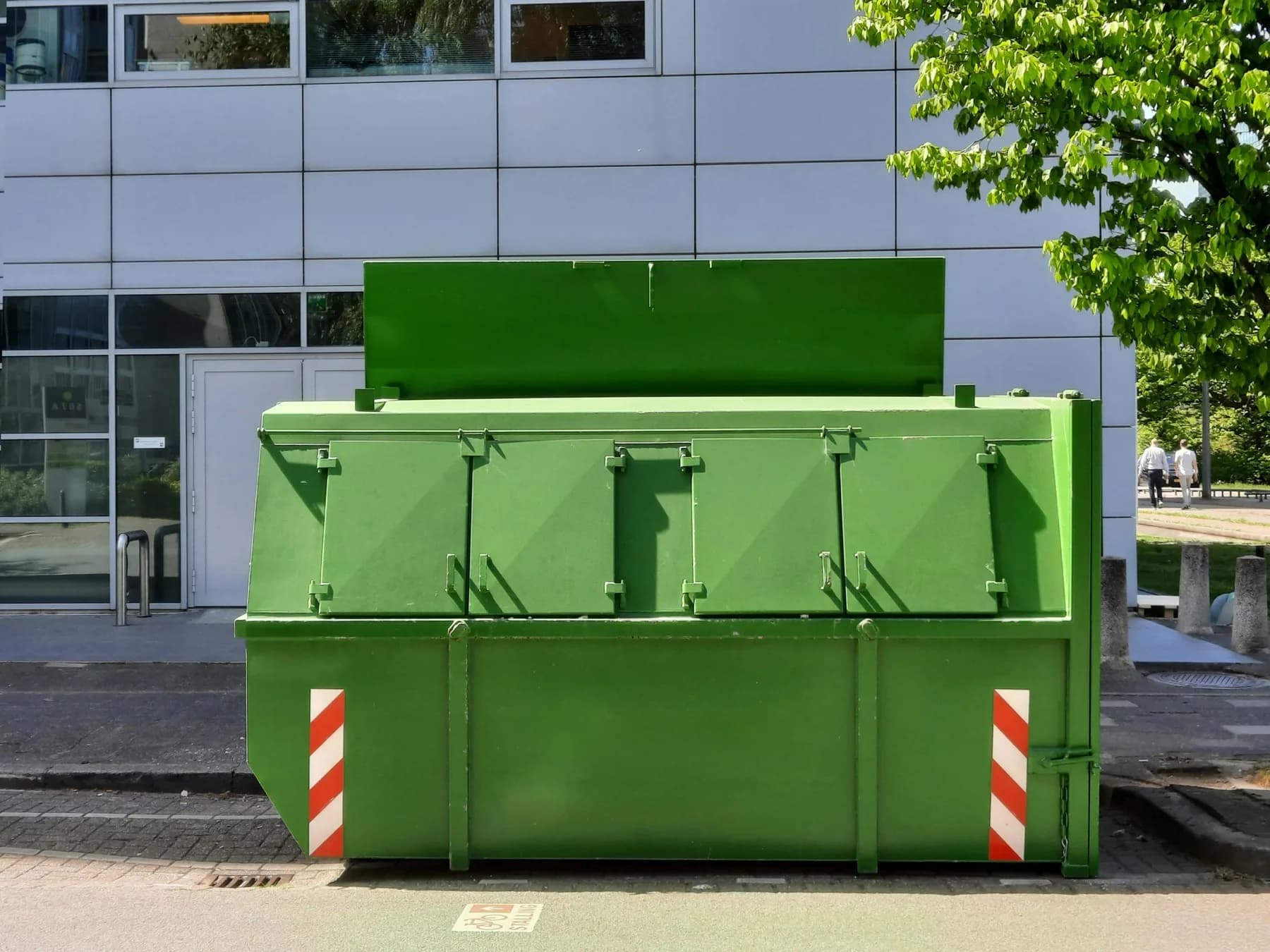
The short version: any solid, non-hazardous waste is allowed in a Wastebins.ca dumpster. That covers about 95% of typical renovation, cleanout, and construction debris. The remaining 5% — hazardous materials, refrigerants, certain electronics, tires, and a few other items — has to be routed through specialized streams under Canadian provincial regulations.
This guide breaks down what's allowed, what's not, what triggers extra fees, and where to take the prohibited items. If you're trying to decide whether renting a dumpster makes sense in the first place, or how to size the bin, those guides are separate.
What you CAN put in (the standard list)
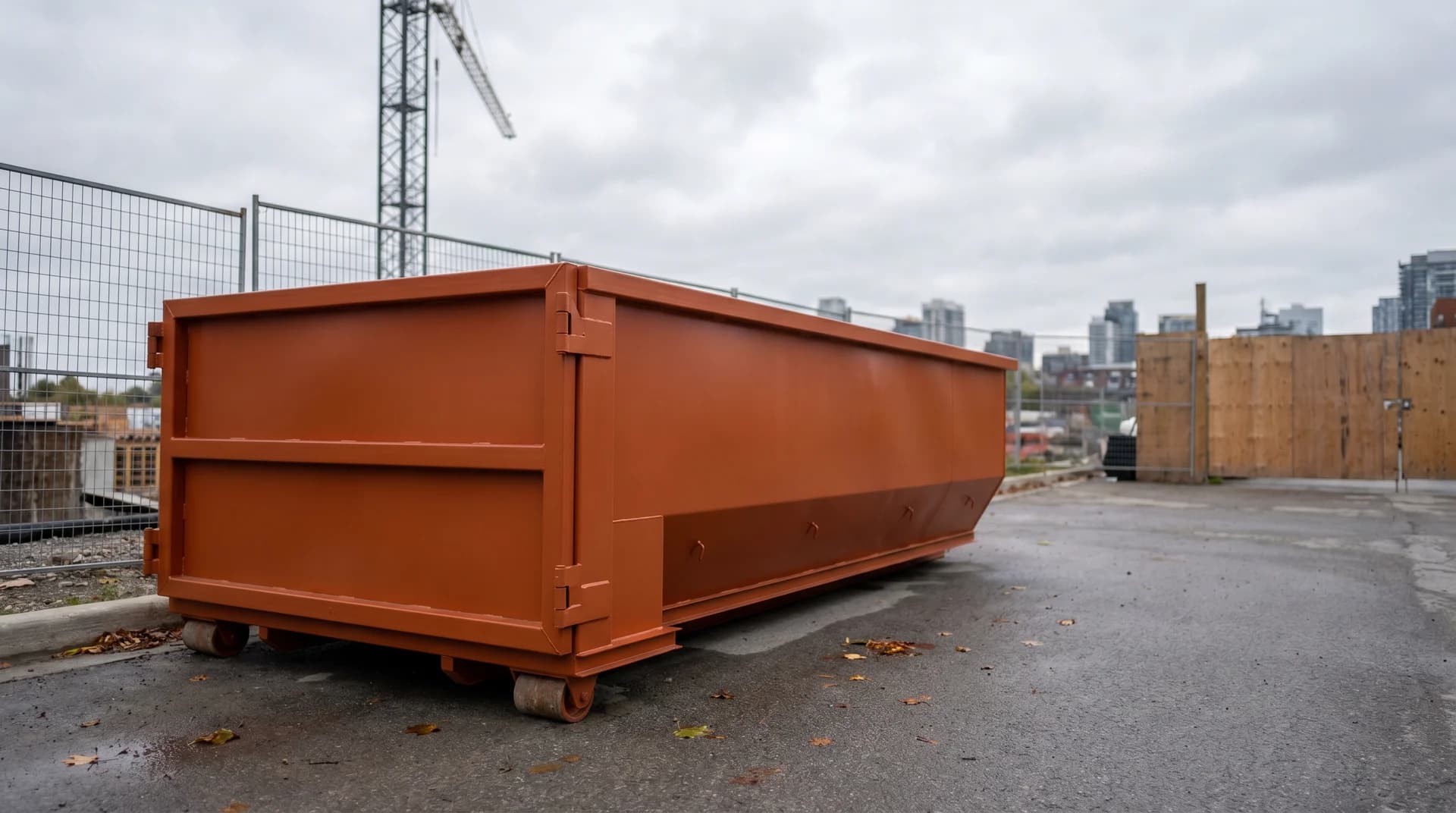
- Renovation debris: drywall, plaster, lumber, flooring (carpet, tile, laminate, hardwood), fixtures, doors, windows, insulation, ductwork.
- Furniture and household items: couches, chairs, tables, beds, mattresses, dressers, mirrors, lamps, books, clothing, toys.
- Appliances (without refrigerant): stoves, dishwashers, washers, dryers, microwaves. Refrigerators and freezers require refrigerant evacuation first — see prohibited section.
- Construction debris: framing lumber, sheathing, subfloor, siding, roofing underlayment, scrap metal.
- Concrete, brick, masonry (heavy debris): allowed, but should be classified as heavy debris at booking so the right bin and weight allowance is set.
- Yard waste: branches, leaves, grass, brush, soil, sod, mulch.
- Asphalt shingles and roofing tear-off: heavy but allowed. A standard 20-yard handles most single-family roof tear-offs.
- Cardboard and packaging: all forms, including waxed cardboard.
- Bagged household garbage: standard kitchen and household waste from a cleanout.
What you CAN'T put in (and where it goes instead)
Hazardous waste
Across every Canadian province, hazardous waste must go to a licensed municipal hazardous-waste depot. Putting it in a roll-off triggers a special-handling fee of $50-150 plus disposal cost. Examples:
- Liquid paint, paint thinner, solvents, varnish
- Motor oil, transmission fluid, antifreeze, brake fluid
- Gasoline, diesel, kerosene, propane (any flammable liquid)
- Pool chemicals, pesticides, herbicides, fertilizer
- Aerosol cans (full or partially used)
- Pharmaceuticals and medical waste
- Asbestos (requires a specifically permitted bin — call us)
Where to take it: most Canadian cities have a free residential hazardous-waste drop-off, either weekly or monthly. Search your city's name plus "hazardous waste depot" for the schedule.
Refrigerants (fridges, freezers, AC units)
Refrigerators, freezers, window AC units, and dehumidifiers contain refrigerant that has to be professionally evacuated before disposal. Provincial environmental regulations make this mandatory and ticketable.
If you have the evacuation certificate from an HVAC tech, the appliance goes in the dumpster. Without it, we charge an $80-120 evacuation fee per unit. The evacuation is a quick job — most HVAC techs do it for $50-80.
Tires
Whole tires can't go in a roll-off under most provincial waste rules. Every province has a tire-stewardship program where retailers and tire shops accept old tires for free or a small fee ($3-5 each). If tires end up in our bin, we charge $20-30 per tire to route them properly.
Batteries
- Lead-acid batteries (car, marine, UPS): every Canadian Tire and auto-parts store accepts these for free recycling.
- Lithium-ion batteries (laptops, phones, power tools): Call2Recycle drop-off bins at most hardware stores and electronics retailers.
- Alkaline batteries (household AA, AAA): also Call2Recycle.
Electronics (e-waste)
Computers, TVs, monitors, printers, audio equipment, microwaves, and small appliances are regulated under provincial e-waste stewardship programs. All provinces accept e-waste for free at designated depots:
- Ontario: CESA (Canadian Electronic Stewardship Alliance) — drop-offs at most municipal depots
- Quebec: ARPE-Québec — drop-off at municipal écocentres
- BC: Encorp (Return-It) Electronics — express drop-off at participating retailers
- Alberta: Alberta Recycling Management Authority — municipal drop-offs
- Other provinces: Electronic Products Recycling Association (EPRA) operates in most provinces with similar drop-off networks
Medical waste, biohazards, and prescriptions
Sharps (needles, lancets), prescription medications, and biohazards must go to a pharmacy or municipal sharps depot. Most pharmacies accept these for free.
Items that trigger extra fees (but aren't prohibited)
| Item | Surcharge | Why |
|---|---|---|
| Mattress | $15-30/each (some cities) | Mattress recycling fee at transfer station |
| Refrigerator/freezer (no evac cert) | $80-120/unit | Refrigerant evacuation |
| Tire | $20-30/each | Tire stewardship rerouting |
| Pure concrete, brick, soil over 1 yard | Reclassified as heavy-debris | Different bin and weight allowance |
| Liquid paint or hazardous waste | $50-150/incident | Special-handling, depot drop-off |
The weight-versus-volume catch
Every dumpster has both a volume limit and a weight limit. Heavy materials hit the weight limit before the volume limit:
- 1 cubic yard of concrete = 2,500 lb (1.1 tons)
- 1 cubic yard of asphalt shingles = 600 lb
- 1 cubic yard of soil = 2,000 lb (1 ton)
- 1 cubic yard of mixed renovation debris = 350 lb
- 1 cubic yard of furniture or cardboard = 150 lb
If you're loading concrete or asphalt, a 10-yard bin will hit weight cap at about 1.5 yards (15% full). For those jobs, ask for a heavy-debris classification — same physical bin, different weight allowance and pricing. Our dumpster sizes guide covers the math in detail.
Mixed loads — what to keep separate
Most jobs produce mixed renovation debris and that's fine — drywall, lumber, fixtures, flooring, and furniture all go in the same bin. The only practical separation rules:
- Heavy debris separate. Pure concrete, brick, asphalt, or soil should not be mixed with light renovation debris in the same bin if you can avoid it. The weight classification gets confused at the transfer station.
- Refrigerants and hazmat NEVER go in. Period.
- Cardboard CAN mix. Some renters separate cardboard for recycling. Optional, not required.
Provincial e-waste resources
- Ontario: recycleyourelectronics.ca
- Quebec: recyclermeselectroniques.ca/qc
- BC: return-it.ca/electronics
- Alberta: albertarecycling.ca
- All provinces: epra.ca
Still not sure if your job's materials are dumpster-friendly? Our dispatch team can verify in 30 seconds — call sales or get a free quote and we'll flag anything that needs special handling before delivery.
Common questions.
Can I put a mattress in a dumpster?
Yes — mattresses are allowed in standard roll-off dumpsters across Canada, though some municipalities charge a small mattress-recycling surcharge ($15-30 per mattress). We disclose this on booking if it applies in your city.
Can I put paint cans in a dumpster?
Only if the paint is fully dried and the can lid is off. Liquid paint is a hazardous waste in every Canadian province and triggers a special-handling fee of $50-100 if it ends up in the bin. Take liquid paint to your municipal hazardous-waste depot.
Can I put a fridge or freezer in a dumpster?
Yes, but only if the refrigerant has been professionally evacuated and you have the documentation. Otherwise we charge an $80-120 evacuation fee. The evacuation is a 15-minute job for any HVAC tech.
What about yard waste?
Yard waste — grass, leaves, branches, soil — is allowed in our dumpsters. Heavy materials like soil and sod hit weight limits faster than volume limits, so size the bin with that in mind. Pure soil or sod is best classified as heavy debris with a smaller bin.
Can I throw away electronics?
Most electronics (computers, TVs, monitors, printers) are NOT allowed in standard dumpsters under Canadian e-waste regulations. They must be routed through provincial e-waste programs — most are free. We list provincial e-waste resources below.
Can I mix materials in the same dumpster?
Yes for most jobs. We accept mixed renovation debris — drywall, lumber, flooring, insulation, fixtures, and furniture in the same bin. Heavy debris (concrete, asphalt, brick) should be separate so the bin can be classified correctly and tipping fees calculated.
Ready to book a dumpster?
Same-day delivery in 60 Canadian cities. No card required. Bilingual dispatch.
Get a quote →