Compactors that cut your hauls — sized to your waste, painted to your brand.
Six compactor types for Canadian restaurants, retail, condos, warehouses, and industry — from leak-proof self-contained units for wet waste to enclosed roll-off compactors for the highest-volume sites. Powder-coated steel, hauler-compatible, delivered and placed Canada-wide.
How a compactor pays for itself
A waste compactor earns its cost by attacking the single biggest line on a high-volume site’s waste bill: the number of hauls. By crushing loose waste to a fraction of its volume, a compactor turns four or five bin pickups a week into one, and every pickup you eliminate is a truck fee, a fuel surcharge, and a tipping charge you stop paying. For a busy restaurant, grocery, warehouse, or condo tower, that typically cuts collection frequency by 60 to 75 percent.
The secondary wins add up: fewer pickups mean fewer trucks in your loading dock, less overflow and litter around the enclosure, fewer pest problems from loose waste sitting out, and a smaller, lockable footprint instead of a row of open bins. On wet waste — food, produce, organics — a sealed self-contained unit also stops leachate from staining the dock and drawing complaints. The break-even is usually measured in months for any site filling several bins a week.
Which compactor for which site
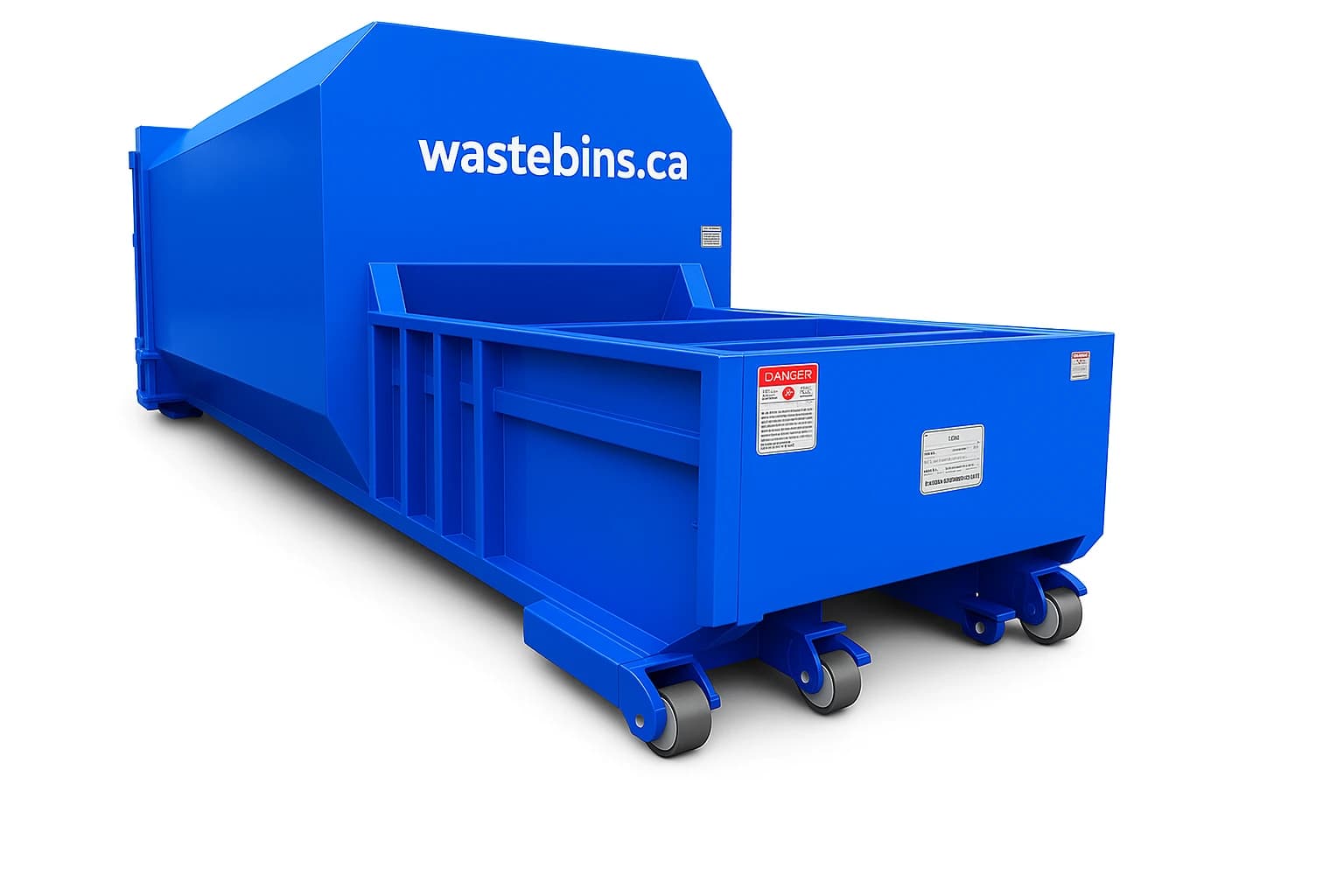
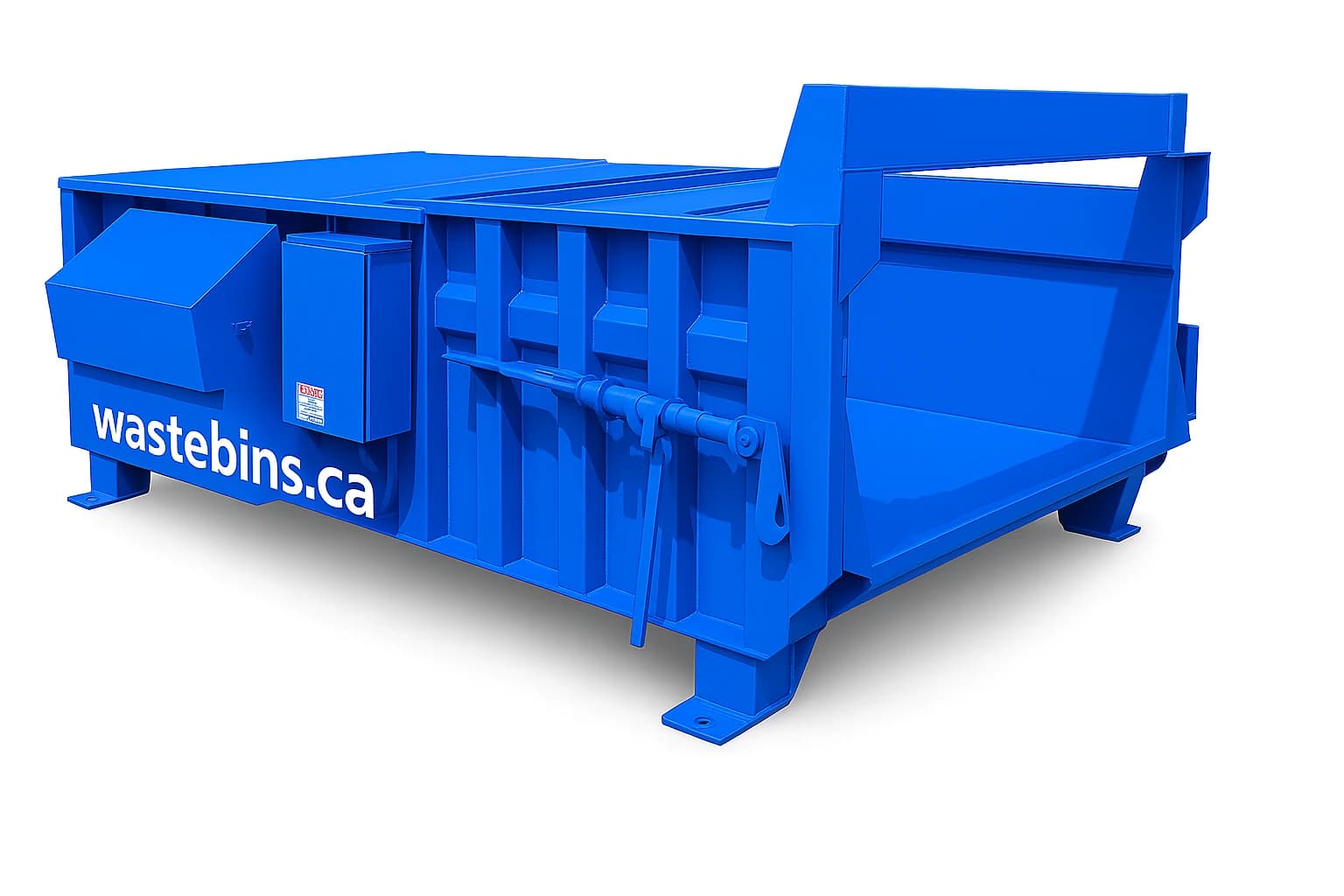
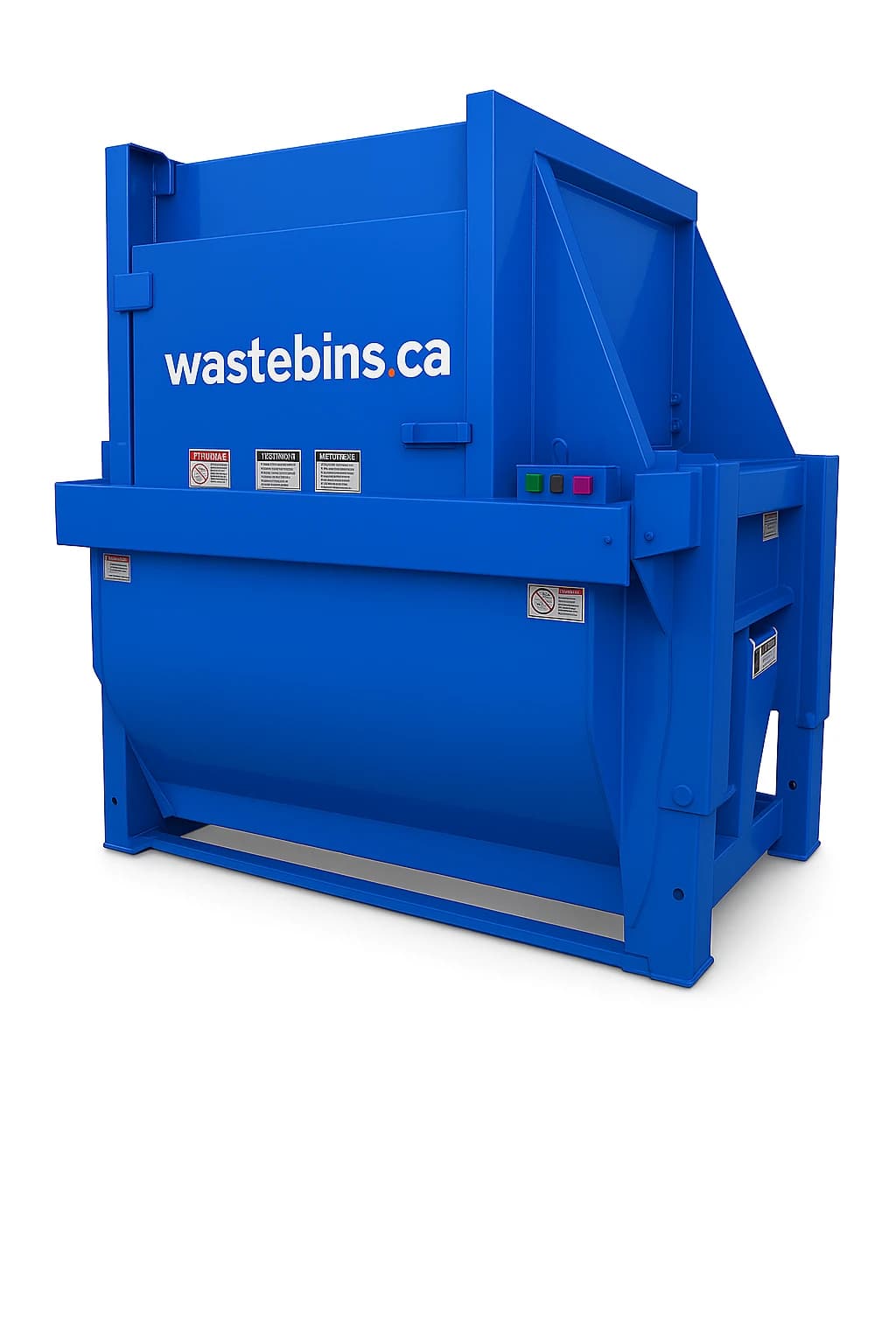
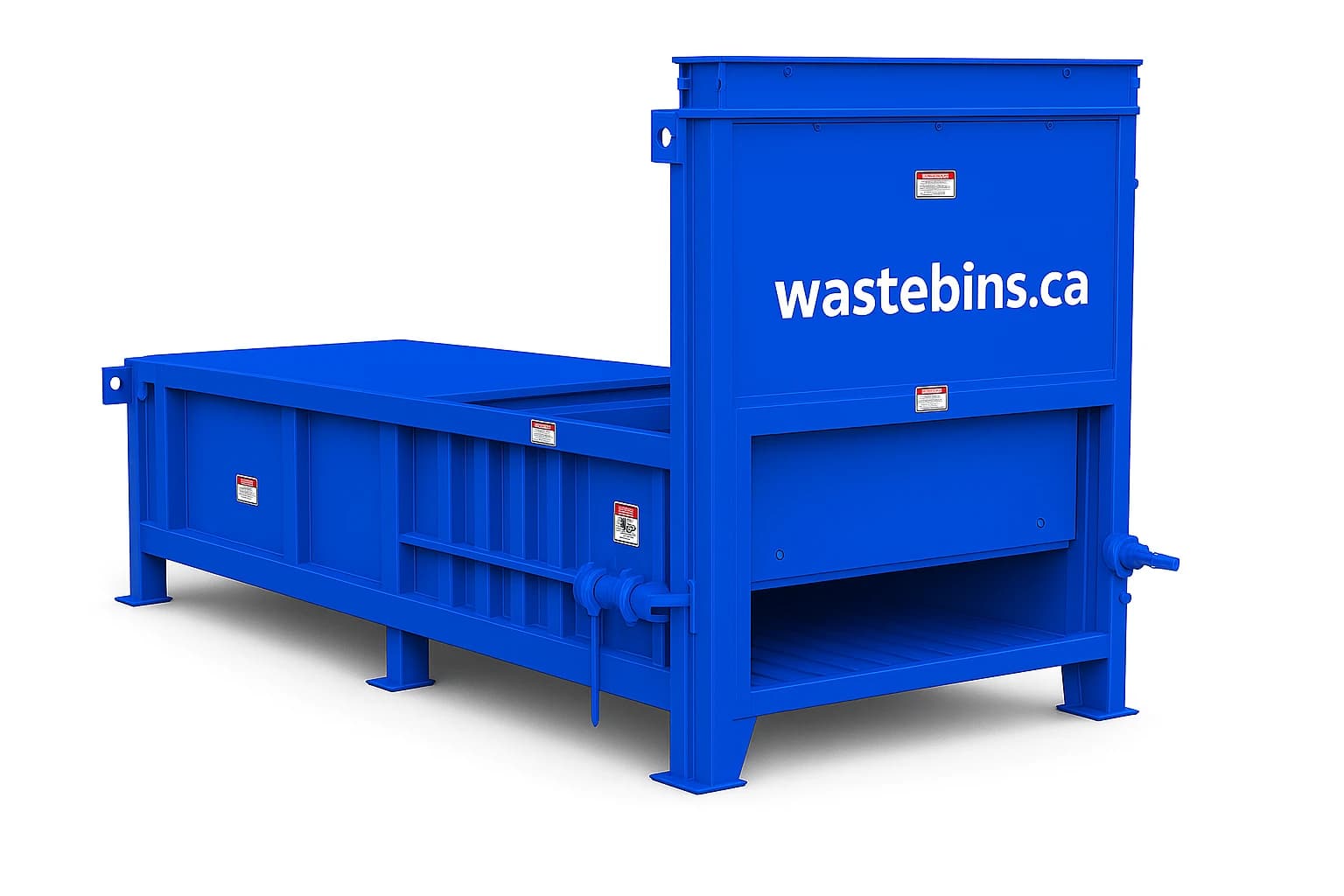
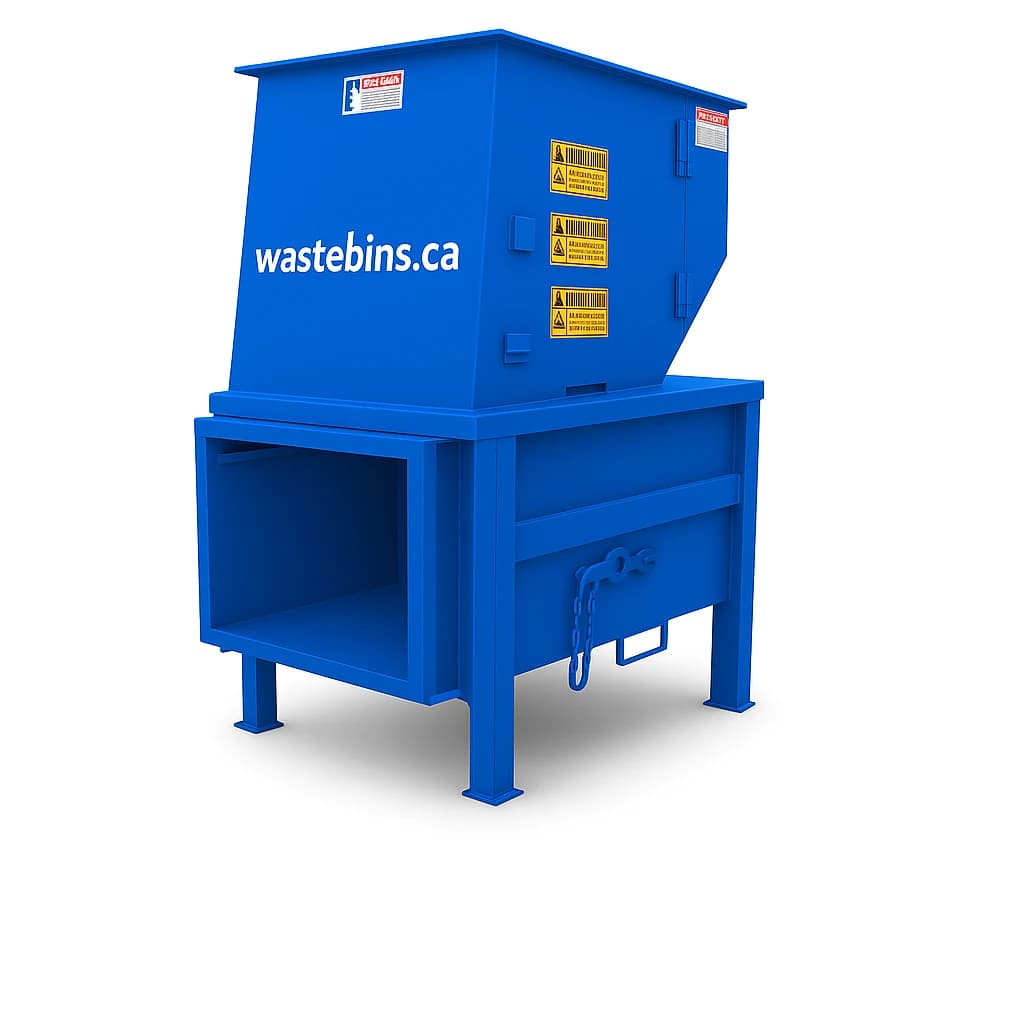
The right unit depends on your waste type, your volume, and the space you have. A vertical compactor suits sites tight on floor space — a single retail unit, a restaurant back room, a condo chute room — where dry waste and cardboard are crushed into bags or a small bin. A stationary compactor bolts to a separate receiver container for dry industrial and commercial volume, and is the workhorse of warehouses and distribution centres.
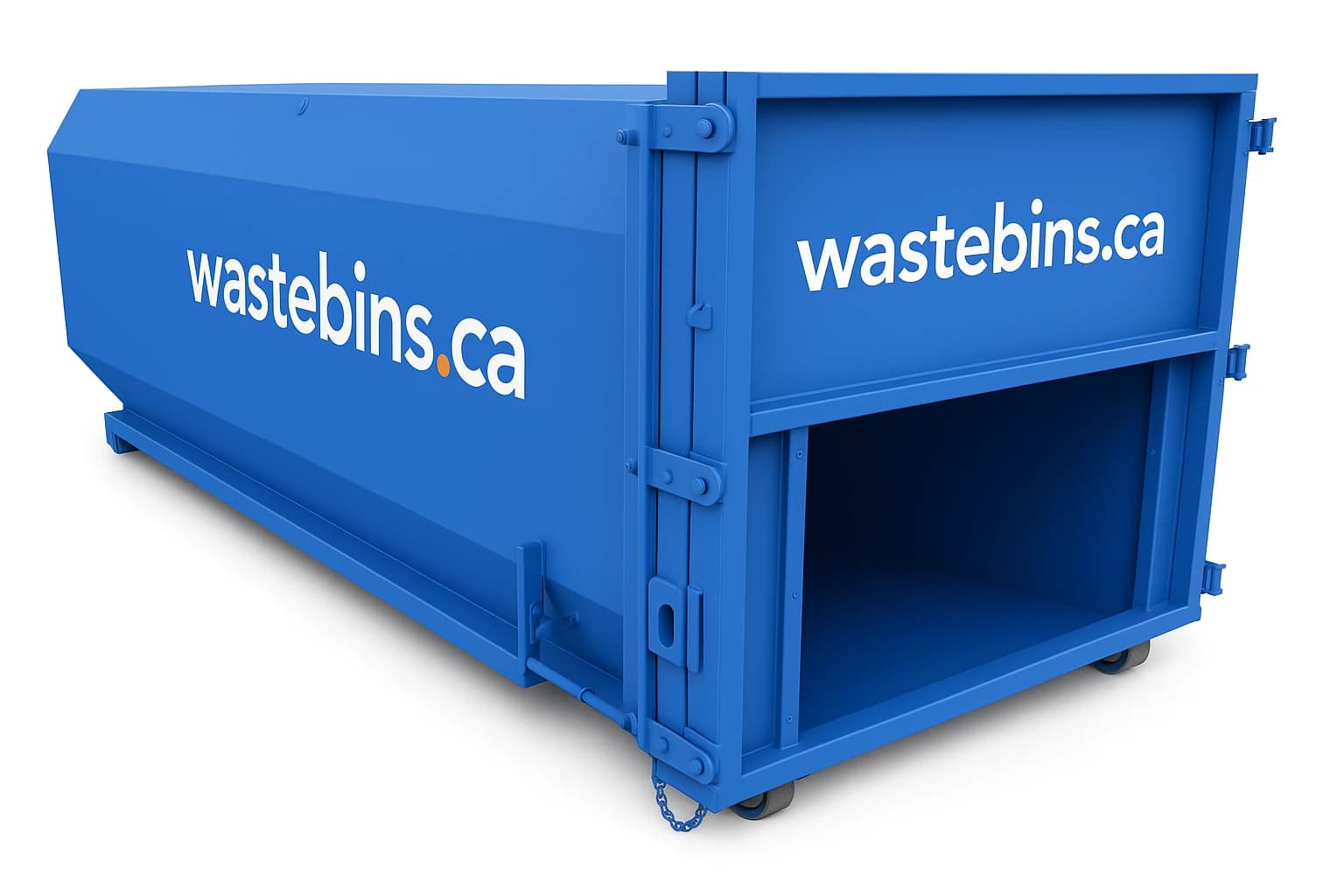
For wet or messy waste, a self-contained compactor seals the compactor and container into one leak-proof unit — the right call for grocery, food-service, and hospitality. A roll-off compactor handles the highest volumes by compacting directly into a haul-away roll-off body, and a pre-crusher breaks down bulky or rigid material — crates, furniture, dense packaging — before compaction so nothing jams the ram. If you are not sure which fits, tell us your waste stream and weekly volume and we will spec it.
Power, placement, and hauler compatibility
A compactor is a piece of fixed equipment, so placement is planned before delivery. Most units run on a standard three-phase supply, and our team confirms the electrical, the pad, and the clearance a hauler needs to service the unit before anything ships. Every compactor we sell is built to standard North-American hauler interfaces, so whichever collection company runs your area can service it — you are never locked to one hauler by the hardware.
The steel is powder-coated and can be finished in your brand colour, which matters when the unit sits in a visible loading court or a shared condo enclosure. We deliver and place Canada-wide, coordinate the electrical hookup with your contractor, and keep the footprint as compact as the model allows so you reclaim dock space rather than lose it.
Buying and quoting a compactor
Compactors are quoted per site rather than off a shelf price, because the cost depends on the type, the receiver or container, the electrical work, and delivery distance. Send us your waste stream, your rough weekly volume, and a photo of the intended location, and we return a specification and a firm number — including the haul-reduction estimate so you can see the payback against your current collection bill.
Because the savings come from fewer hauls, the sites that benefit most are the ones filling several bins a week today; if your volume is lower, a right-sized front-load rental is the more economical answer and we will tell you so rather than oversell a compactor. For the high-volume sites where it does pay, a compactor is one of the few pieces of waste equipment that lowers a recurring operating cost for years after the purchase.